 E-Commerce
Mobile Money Integration for Ghana Websites: Complete Guide
Learn how to integrate MTN Mobile Money, Vodafone Cash, and AirtelTigo Money into your website.
10 min read
February 10, 2025
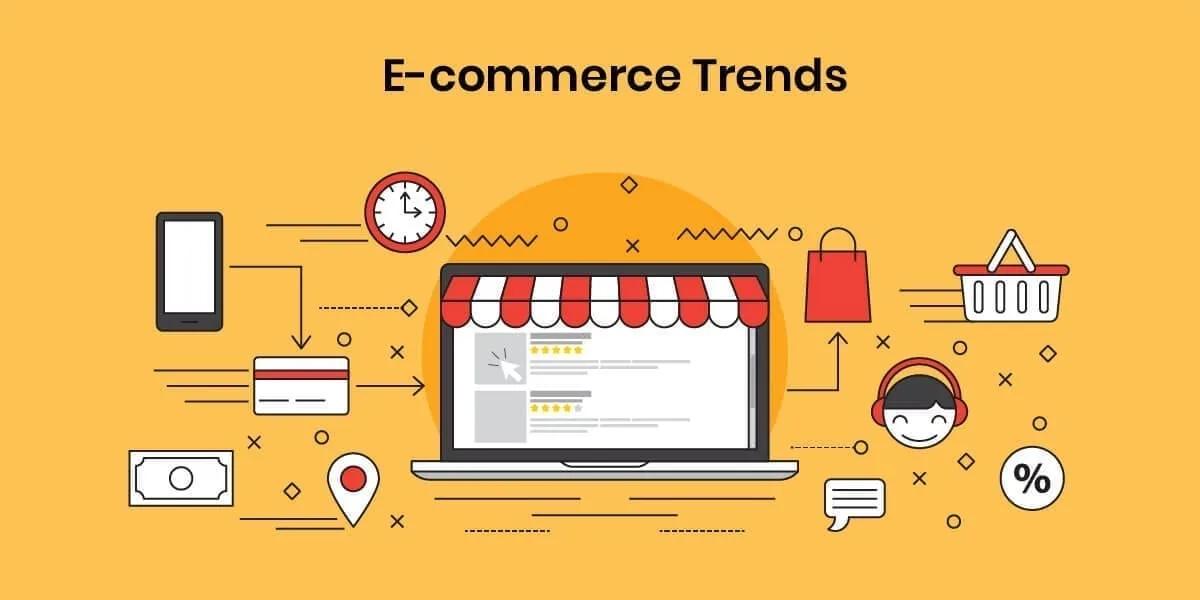
Ghana's digital economy has entered a new phase. What began as a modest online retail space dominated by a handful of platforms has matured into a dynamic, competitive ecosystem where businesses of all sizes are selling online, processing payments instantly, and reaching customers far beyond their physical locations.
In 2026, e-commerce in Ghana is not a trend to watch — it is a market to be in.
This guide covers the key trends shaping online retail in Ghana this year, the tools powering the best stores, and how Celestial Web Solutions positions businesses at the front of this shift.
Internet penetration in Ghana continues to grow, with mobile internet access driving the majority of online activity. Consumers in Accra, Kumasi, Takoradi, and increasingly in secondary cities are shopping online for fashion, electronics, groceries, health products, and services.
Several forces are converging to make 2026 a pivotal year for Ghanaian e-commerce. Mobile Money has become deeply embedded in everyday transactions. Delivery infrastructure is improving. Consumer trust in online shopping has risen significantly. And a new generation of digitally native shoppers expects seamless, fast, and professional online experiences.
Businesses that invest in the right e-commerce foundation now will be the ones capturing this demand over the next five years.
Over 85 percent of online shopping in Ghana happens on smartphones. This is not a future projection — it is the current reality. If your online store is not built mobile-first, you are actively losing customers every single day.
Mobile-first design means more than a responsive layout. It means fast load times on 3G and 4G networks, thumb-friendly navigation, large tap targets, streamlined checkout flows, and payment options that work natively on mobile devices.
The stores seeing the highest conversion rates in Ghana in 2026 are those that treat mobile as the primary experience, not an afterthought.
MTN Mobile Money, Telecel Cash, and AirtelTigo Money are no longer alternative payment options — they are the default. Any e-commerce store in Ghana that does not integrate Mobile Money is excluding the majority of its potential customer base.
Beyond Mobile Money, the leading Ghanaian stores are integrating Paystack and Flutterwave to support card payments, bank transfers, and international transactions. The best e-commerce setups offer multiple payment options at checkout without friction, letting each customer pay the way they prefer.
Celestial Web Solutions integrates all major payment gateways into every e-commerce build — Mobile Money, Paystack, Flutterwave, and card payments — configured and tested before launch.
Ghanaian consumers increasingly discover products through Instagram, TikTok, and Facebook before visiting a website to purchase. Social commerce — selling through or alongside social media — is now a critical part of the e-commerce funnel.
This means your website needs to work seamlessly with your social media presence. Product pages need to be shareable. Landing pages should match the creative your audience sees on social. WhatsApp integration allows customers to move from a social post to a direct conversation to a purchase in minutes.
Stores with strong social-to-website pipelines are outperforming those that treat their website and social media as separate channels.
Consumer expectations around delivery have shifted sharply. Buyers in Accra increasingly expect same-day or next-day delivery for in-city orders. Businesses that can promise and deliver on fast fulfilment are converting at significantly higher rates.
This means your e-commerce website needs to clearly communicate delivery timelines, offer multiple delivery options, and integrate with logistics partners. Stores that display estimated delivery dates on product pages and during checkout see measurably lower cart abandonment.
Larger Ghanaian e-commerce platforms are beginning to implement product recommendation engines, personalised email flows, and dynamic content based on browsing history. This was previously the domain of international retailers — in 2026, the tools to do this are accessible to businesses of all sizes.
Even basic personalisation — showing recently viewed items, recommending related products, sending abandoned cart emails — can increase revenue by 15 to 30 percent without increasing traffic.
Subscription models are gaining traction in Ghana across categories including beauty products, food delivery, digital services, and business supplies. Customers who subscribe generate predictable, recurring revenue and tend to have significantly higher lifetime value than one-time buyers.
E-commerce platforms built on modern technology stacks can support subscription billing, recurring payments via Mobile Money or card, and automated fulfilment workflows that make subscription models operationally manageable at scale.
As more Ghanaian consumers shop online, they have also become more discerning. Trust is now a primary conversion factor. Stores with clear return policies, verified customer reviews, transparent contact information, secure payment badges, and professional design convert significantly better than those without.
A poorly designed store — slow, cluttered, with no visible contact details or security indicators — loses the sale before the customer even reaches the product page.
The gap between a basic online store and a high-performing e-commerce website comes down to the technology stack it is built on. Here is what Celestial Web Solutions uses to build modern, competitive e-commerce websites for Ghanaian businesses in 2026.
Next.js is the framework of choice for modern e-commerce websites that need to be fast, SEO-friendly, and scalable. Unlike traditional WordPress or template-based stores, Next.js delivers server-side rendering and static generation — meaning pages load near-instantly, even on slower mobile connections.
Speed is directly tied to revenue in e-commerce. A one-second improvement in load time can increase conversions by 7 percent. Next.js gives Ghanaian businesses the performance foundation that competing on template builders simply cannot match.
React powers the interactive elements of modern e-commerce — real-time product filtering, dynamic cart updates, instant search, size selectors, image galleries, and wish lists — all without full page reloads. The result is a shopping experience that feels fast and responsive, matching the standard consumers expect from leading international retailers.
Sanity is the headless CMS that Celestial Web Solutions integrates into e-commerce builds to give business owners full control over their product catalogue, promotional content, blog, and media — without touching code.
Unlike WordPress, which becomes slow and vulnerable as plugins accumulate, Sanity is purpose-built for structured content at scale. Business owners can update product descriptions, add new items, change banners, and manage collections from a clean, intuitive studio. Content changes appear on the live store in seconds.
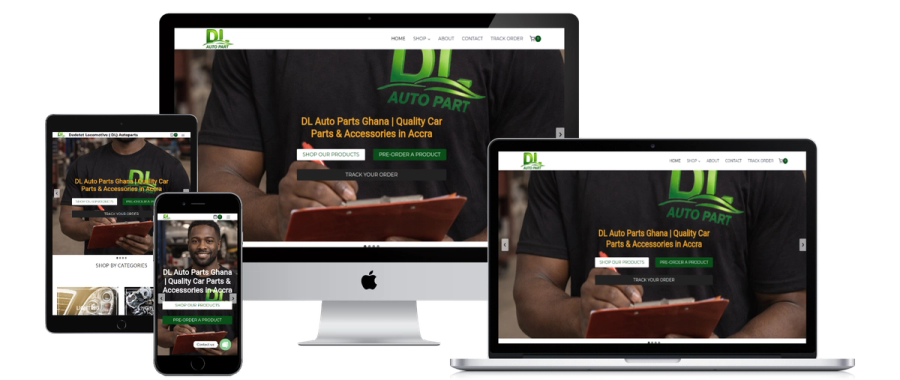
DL Autos
Paystack and Flutterwave are the payment backbone of Ghanaian e-commerce. Both platforms support MTN Mobile Money, Telecel Cash, AirtelTigo Money, Visa, Mastercard, and bank transfers — covering every payment method a Ghanaian customer might prefer.
Celestial Web Solutions integrates these gateways with proper webhook handling, order confirmation emails, and payment failure recovery flows — not just a basic button on a checkout page.
Tailwind CSS enables the rapid development of custom, professional designs without the bloat of traditional CSS frameworks. Every Celestial e-commerce build is visually unique, brand-consistent, and optimised for the specific product category and target audience — not a theme that fifty other businesses are also using.
Vercel is the hosting platform built specifically for Next.js applications. It delivers content through a global edge network, meaning customers in Accra, Kumasi, and Takoradi all experience fast load times. Automatic scaling handles traffic spikes — whether from a social media post going viral or a seasonal sale — without manual intervention or downtime.
At Celestial Web Solutions, we do not build generic online stores. We build e-commerce websites engineered for the Ghanaian market — fast on mobile networks, integrated with local payment methods, optimised for search engines, and designed to convert browsers into buyers.
Every e-commerce build includes Mobile Money and Paystack integration, mobile-first responsive design, SEO configuration from day one, product management via Sanity CMS, order management and email notifications, WhatsApp integration for customer support, and post-launch support.
Whether you are launching your first online store or migrating from an underperforming platform, we bring the technical depth and local market understanding to build something that performs.
Ghana's e-commerce opportunity is real and growing. The businesses building on the right foundations today will be the market leaders in this space over the next five years. The question is whether your store is ready to compete at that level.
Check our Portfolio page for our works.
E-CommerceLearn how to integrate MTN Mobile Money, Vodafone Cash, and AirtelTigo Money into your website.
 E-Commerce
Explore the latest e-commerce trends shaping online retail in Ghana.